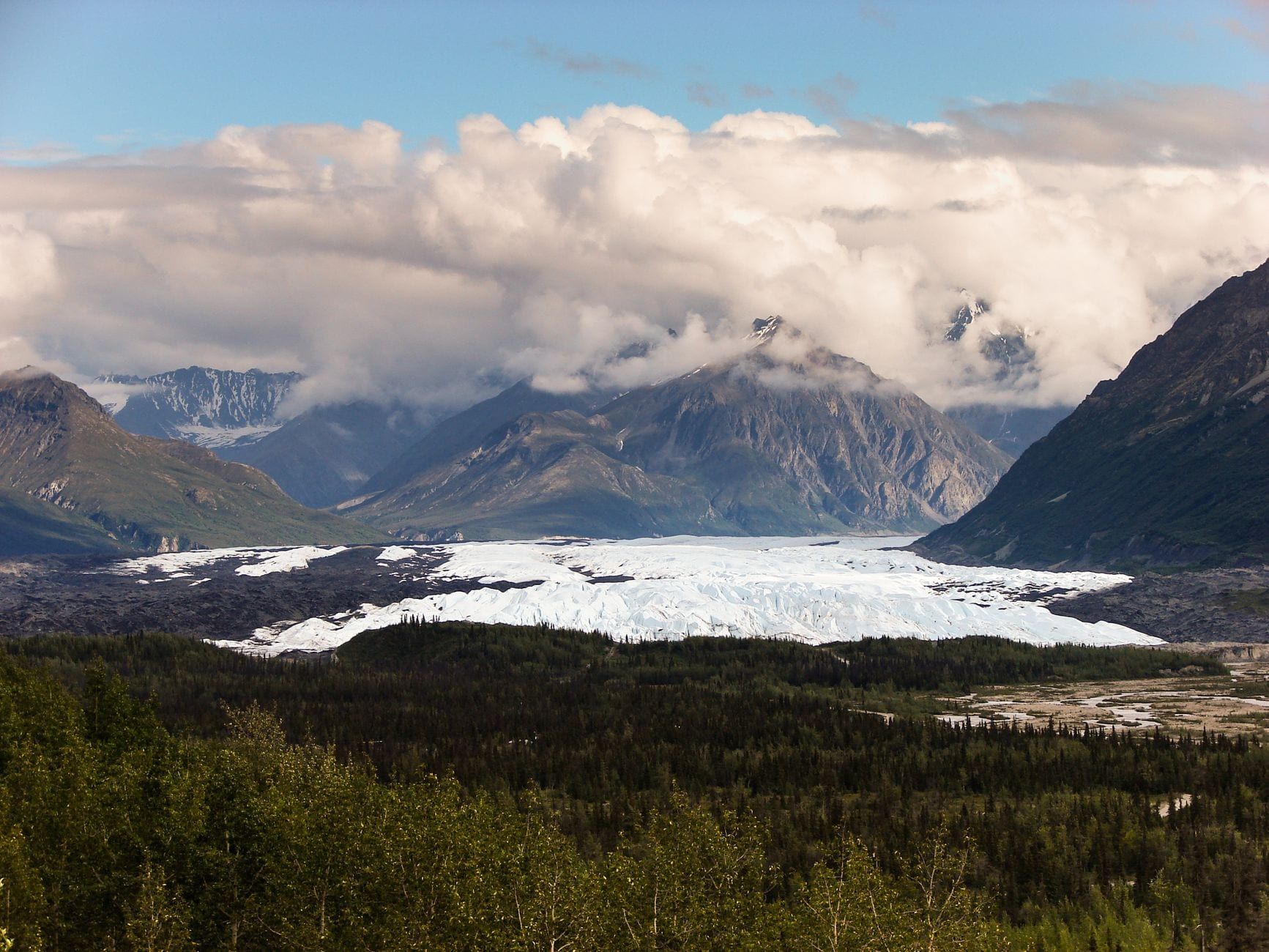
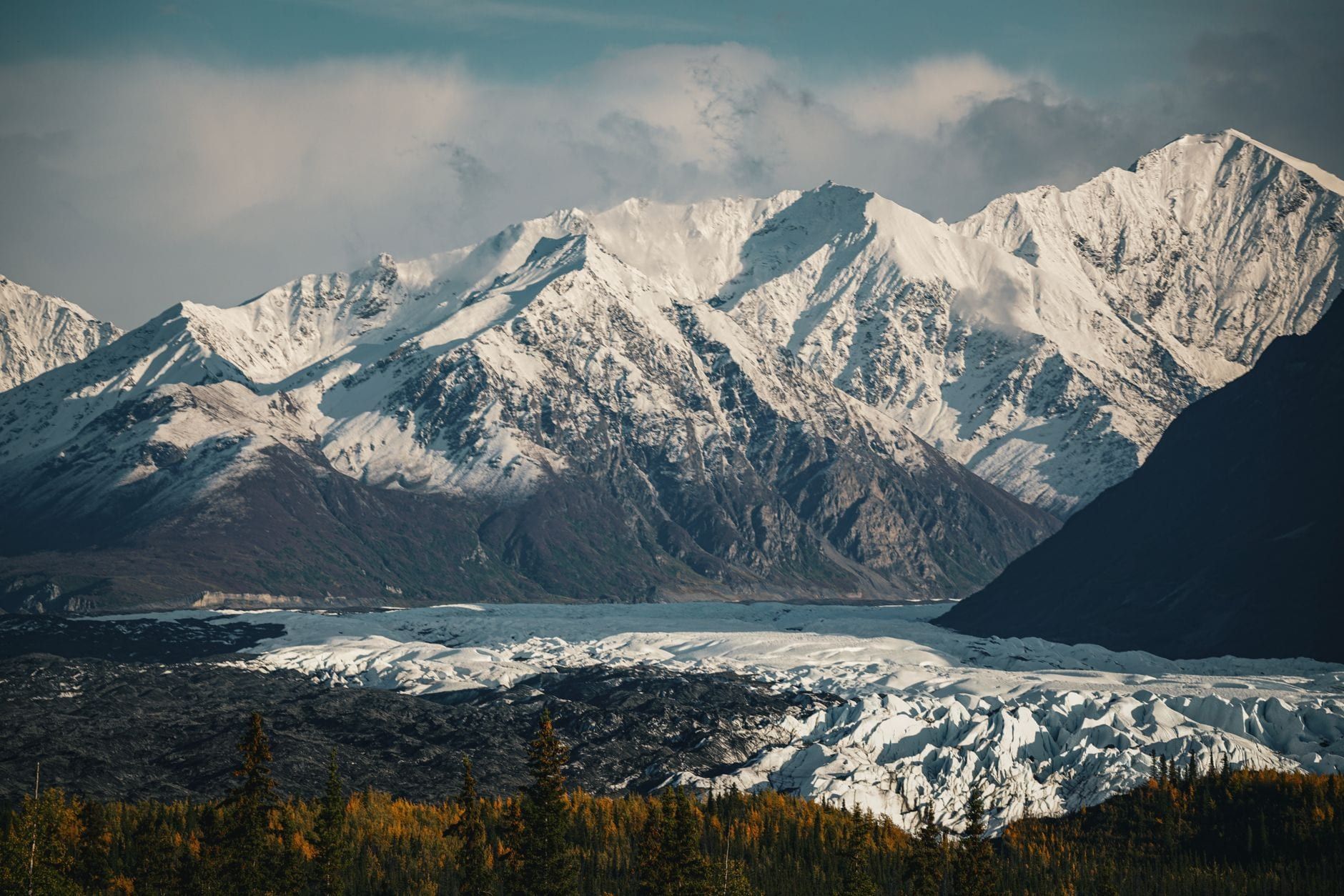
Matanuska Glacier lets you walk onto real ice about two hours from Anchorage, but you can't just park and wander out onto the crevasse field. A private company controls the only road down to the ice, and for most of the year every step past the parking lot requires a paid guide.
Alaska's state park system runs a free viewing site next door, so there's a way to see the glacier for the price of a tank of gas if a guided trek isn't in the budget. This guide covers when you actually need a guide, what the tours cost, how hard the walking really is, and what to pack so the day isn't ruined by wet socks.
Do You Need a Guide to Hike Matanuska Glacier?
For most of the year, yes. The access road crosses land controlled by a private operator, and outside summer's stable conditions, only guides lead groups past the parking area. Winter, spring, and fall visitors need a certified guide with crevasse-rescue training — there's no other legal way onto the ice in those seasons.
Summer bends the rule slightly. Roughly June through September, the gate allows self-guided access after you pay the fee and sign a liability waiver, but that route dead-ends fast: a sign reading "End of unguided trail — do not proceed without proper footwear" marks where casual visitors turn back. It gets you onto the terminus ice, not to the ice falls, moulins, or blue pools guides walk you to.
The road itself is private, run by an entity affiliated with Cook Inlet Region, Inc., so state park passes and America the Beautiful passes don't work at this gate. That's also why access rules shift by season and operator. If you want the ice falls and blue pools rather than just a look at the terminus, book one of the guided hiking tours — it's the only way to reach the features that make the drive worth it.
Matanuska Glacier at a Glance
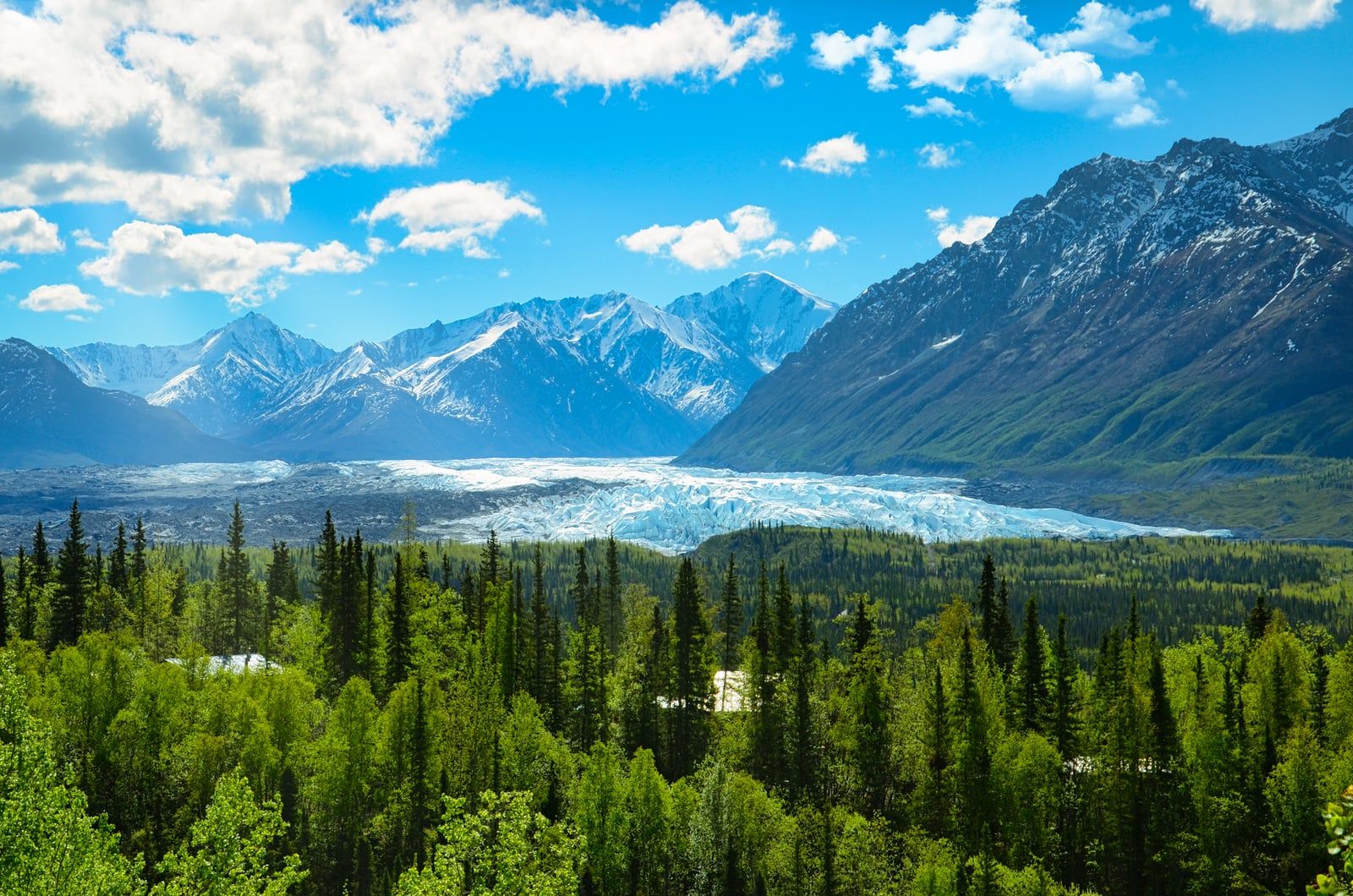
Matanuska Glacier runs 27 miles from the Chugach Mountains down to a terminus that flares to about 4 miles wide, making it the largest glacier in the U.S. reachable by car. It's fed by snow accumulating near Mount Marcus Baker, at 13,176 feet the highest peak in the Chugach Range, and its meltwater becomes the Matanuska River that runs alongside the highway for miles.
The ice moves roughly a foot a day internally, yet the terminus itself has barely shifted in decades — researchers found almost no change in its position between the 1970s and 2007. That stability is part of why it's such a dependable place to learn to walk on a glacier. Guides know the terrain and can predict where new crevasses tend to open.
It sits about 100 miles northeast of Anchorage on the Glenn Highway, roughly an hour past Palmer. The full history and visitor details are worth a read before you go, especially for context on what you're looking at once you're on the ice.
Getting There: Directions, Fees & Logistics
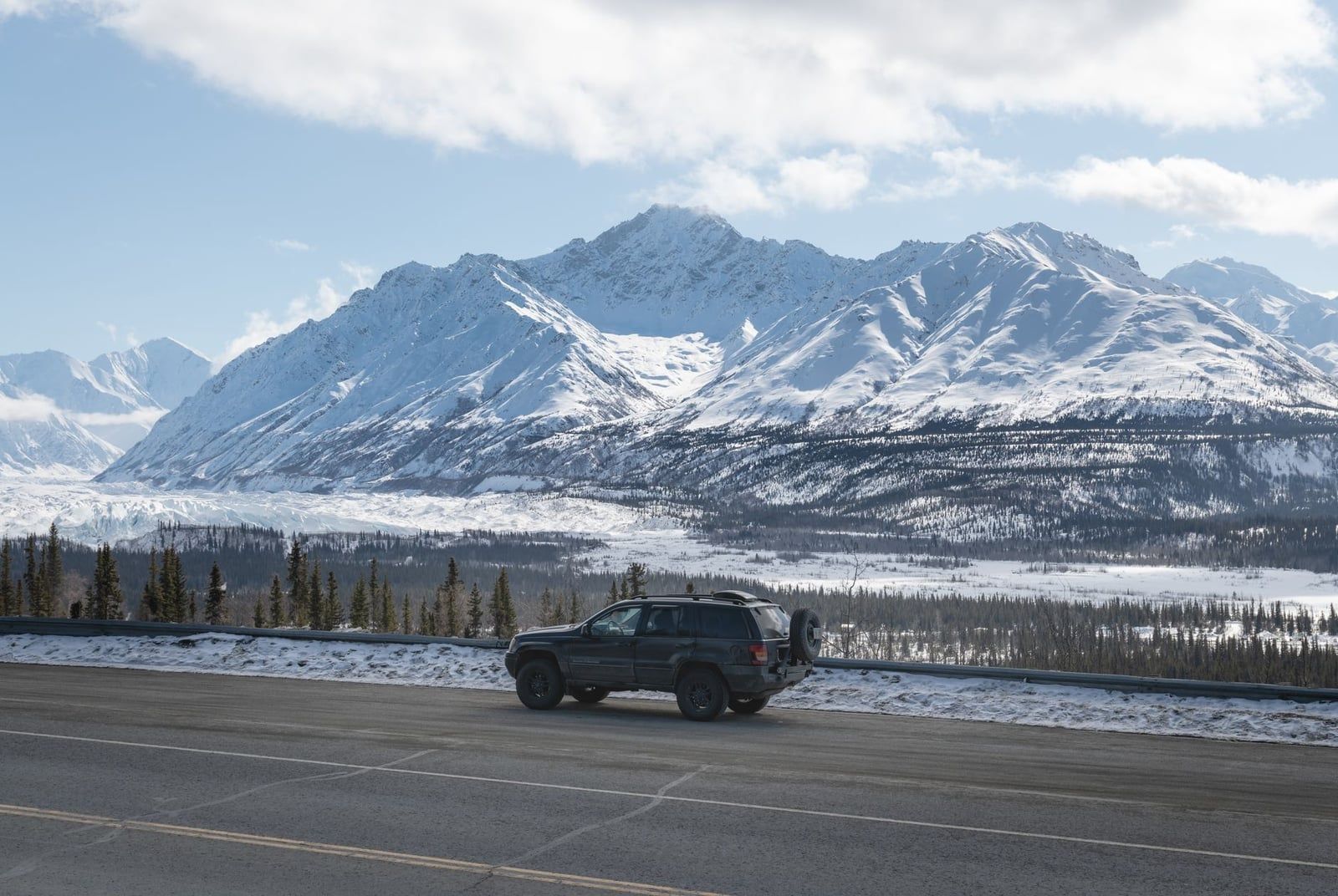
From Anchorage, follow the Glenn Highway north through Palmer and Chickaloon to around Mile 101-102, where a blue "Glacier Access" sign marks the turnoff to the private parking lot and check-in office. The drive covers about 100 miles and takes 2 to 2.5 hours each way, longer if construction slows traffic near Sutton. Full turn-by-turn directions are worth bookmarking, since cell service thins out past Palmer.
Budget for two separate charges. The tour price covers your guide and gear; a separate "Glacier Park" access fee, paid at the gate, covers crossing the private land to reach the ice. That gate fee has climbed in recent years — current rates list $55 for adults, $25 for teens 13-16, $30 for Alaska residents, military, and seniors 65+, and free entry for kids 8-12. Older posts quoting $25-30 per person are out of date, so check current hours and fees before you set a budget.
No car? Several operators run round-trip pickups from Anchorage hotels, and at least one company offers private local-driver transport for a fee. Booking a tour with pickup included is the simplest fix if you're relying on transit or don't want to drive the Glenn Highway twice in one day.
Choosing a Guided Hike: Tour Types & Prices Compared
Three companies run most of Matanuska Glacier's guided hikes, and their offerings split into clear tiers. Browse the full range of Matanuska Glacier tours before committing, since availability shifts with the season and group size.
Standard Walk: 2-3 Hours, Easy
This is the tour most first-timers book. NOVA Alaska Guides runs a 3-hour Matanuska Glacier Tour and a similarly paced Family Tour, both rated easy and priced at $115 per person plus the gate fee, with minimum ages of 10 and 8 respectively. MICA Guides' equivalent, the Ice Fall Trek, starts at $129 per person with a minimum age of 10 (6 on private bookings). Expect a short walk across moraine, crampons at the ice edge, then an hour or so exploring blue pools and small formations near the terminus.
Adventure Trek & Ice Climbing: 6-8 Hours
Fitter hikers who want more than photos should look at NOVA's 6-hour Adventure Trek ($225/person, moderate difficulty, minimum age 12) or its 8-hour Backcountry Ice Climbing tour ($249/person). MICA's ice-climbing day runs about $279 per person for 8 hours, also minimum age 12. These push further onto the ice, closer to the crevasse fields and headwall, with real physical effort — longer distances and technical footwork with ice tools on the climbing routes.
Private and Family Tours
Groups wanting their own guide instead of a shared departure can book private treks. One recent booking for up to six people, minimum age 6, ran $575 total, plus the per-person gate fee. It suits a family with a young child or anyone who doesn't want to match pace with strangers, and the price often lands close to the standard rate once split across a full group.
Self-Drive vs Full-Service Pickup
Glacier Tours runs a lower-cost, self-drive option: hourly departures through the summer, no transportation or meals included, and a guide-to-guest ratio around 1:18 — fine for a standard walk on a budget, less so if you want personal attention. NOVA and MICA both run smaller groups and some packages include transport from Anchorage. Families and anyone nervous about crevasses should pay for the smaller-group tour. Budget travelers with their own car and average fitness can save money on the self-drive option and still walk the same ice.
| Tour | Duration | Difficulty | Min. Age | Price |
|---|---|---|---|---|
| NOVA Standard/Family Tour | 3 hrs | Easy | 8-10 | $115/person + gate fee |
| NOVA Adventure Trek | 6 hrs | Moderate | 12 | $225/person + gate fee |
| NOVA Backcountry Ice Climbing | 8 hrs | Strenuous | 12 | $249/person + gate fee |
| MICA Ice Fall Trek | 3 hrs | Easy-Moderate | 10 (6 private) | From $129/person + gate fee |
| MICA Ice Climbing | 8 hrs | Strenuous | 12 | From $279/person + gate fee |
| Glacier Tours self-drive walk | ~2 hrs | Easy | All ages | Gate fee only, no transport/food |
What the Hike Is Actually Like
The walk starts on dry ground, not ice. From the parking area, guides lead groups across a stretch of terminal moraine — loose rock, silt, and gravel sitting directly on top of buried glacier ice. Metal grates and marker cones keep everyone on a packed path, because a few steps off it and wet silt can grip a boot like wet cement.
Crampons go on where the moraine gives way to solid ice, usually 10-15 minutes in. From there, a standard tour covers roughly one to two miles round trip over about two hours, stopping often at ice falls, meltwater streams, and moulins — vertical shafts where surface water disappears into the glacier. Some have refrozen at the bottom and filled with startlingly turquoise water. The color comes from dense ice absorbing red light and reflecting blue, so the darkest pools mark the oldest ice.
Footing is the main adjustment. Ice isn't flat. It's ridged, pitted, and occasionally slick, and a normal hiking stride doesn't translate directly. Guides set the pace and pick the line, which is most of what you're paying for beyond the crampons. Rate the standard tour easy; rate the adventure trek and ice-climbing days moderate to strenuous, with real distance and elevation change involved.
Safety: Crevasses, Moulins & Why Guides Are Required
Crevasses on Matanuska Glacier range from ankle-deep to several hundred feet, and from the surface a hairline crack can look identical whichever depth it hides. That's the entire argument for guided access: a guide who walks this ice regularly can read which cracks are shallow and which aren't, and unguided visitors generally can't.
Above the headwall, unstable seracs — towers of ice that can calve without warning — sit near a maze of crevasses that shifts with the season. The glacier stays active: new cracks open, old ones close, and subsurface streams can trigger sudden meltwater floods or small ice avalanches. There have been fatalities on the ice, including a snowmachine rider who drove into a crevasse, a plain reminder this isn't a groomed trail.
Guides mitigate the risk with training most visitors don't have: crevasse-rescue certification, roped travel on technical sections, and route checks before groups head out. That's what the tour price buys, on top of the gear.
What to Pack and Wear
Guides supply the technical gear: crampons or microspikes, a helmet on trekking and ice-climbing routes, and sometimes trekking poles or a climbing harness. Bring sturdy, waterproof boots that traction gear can strap onto — rental crampons typically fit only about a kids' size 2 through a men's size 15, so check your size before you book if you're outside that range.
Layer up even in July. Katabatic winds roll off the ice and the terminus runs noticeably colder than Anchorage or Palmer, so pack a warm mid-layer, a wind or rain shell, gloves, and sunglasses for the glare off the ice. Sunscreen matters too, since there's little shade out on the moraine.
Use the restroom before you head out, since there's nothing but open moraine once you're past the gate.
Best Time of Year to Hike
June through September is the easy window. Ice conditions are most stable, daylight runs close to 19 hours in late June, and every operator runs a full schedule, typically departing hourly between 9am and 5pm. Wildflowers dot the moraine by midsummer, which makes for a better photo than bare gravel.
Winter, roughly November through March, swaps the ice falls for ice caves. Guided tours in the cold months are limited to the frozen lake beneath the headwall, where meltwater caves form fresh shapes every year — no two winters look the same. It's colder and darker, but the caves alone are worth booking a winter tour for if you're already in Alaska in the off-season.
Skip spring and fall if you can help it. April and May bring rapid melt that makes trail conditions unpredictable day to day, and by October crevasses are at their widest, right before the first real snow locks things down. Guides sometimes cancel departures in these shoulder months if conditions turn, so build flexibility into your itinerary if that's when you're traveling.
Not Ready to Hike? Free Ways to See the Glacier
Two free-or-cheap spots let you see the ice without booking a guide or paying the private gate fee, though neither puts you on the glacier itself.
Matanuska Glacier State Recreation Site
This 229-acre state site at Mile 101 charges $7 per vehicle for day use and gives you a real look at the glacier without touching the private access road. The Edge Nature Trail is about a 20-minute walk through forest to viewing platforms with interpretive signs. It won't put you on the ice, but it's an easy stop with restrooms, picnic tables, and campsites from $20 a night if you want to wake up facing the glacier.
Mile 103 Scenic Pullout
A roadside turnout at Mile 103 of the Glenn Highway gives glacier views with no parking fee at all, useful if you're just passing through and want five minutes with a camera. Neither this pullout nor the state site gets you onto the ice. For that, you're back to booking a guided walk through the private gate.
Frequently Asked Questions
Can you hike on Matanuska Glacier without a guide?
Only partly, and only in summer. The private gate allows self-guided access to the terminus after you sign a waiver and pay the fee, but a marked sign ends the unguided trail well short of the ice falls and blue pools. Winter, spring, and fall access requires a certified guide.
How much does it cost to hike Matanuska Glacier?
A standard 2-3 hour guided walk runs $115-$130 per person; adventure treks and ice climbing run $225-$280. On top of that, the private gate charges its own access fee, currently $55 for adults, $30 for Alaska residents, military, and seniors, $25 for teens, and free for kids 8-12.
How hard is the Matanuska Glacier hike?
The standard tour is rated easy and works for most fitness levels, including kids around age 8-10 and seniors up to about 75. Adventure treks and ice climbing are moderate to strenuous, with more distance and technical ice.
How long is the Matanuska Glacier tour?
Standard walking tours run 2-3 hours. Adventure treks run about 6 hours, and ice climbing days run about 8. Private tours vary by group size and arrangement.
What should I wear to hike on the glacier?
Sturdy waterproof boots, warm layers, a rain or wind shell, gloves, and sunglasses. Guides provide crampons or microspikes and a helmet, but check your shoe size against their rental range before you book.
What is the best time of year to hike Matanuska Glacier?
June through September gives the most stable ice and full operator schedules. Winter, November through March, trades the ice falls for guided ice-cave visits at the frozen headwall lake. Spring and fall are the least reliable, with rapid melt or widening crevasses.
How far is Matanuska Glacier from Anchorage?
About 100 miles, a 2 to 2.5-hour drive up the Glenn Highway. It's roughly an hour from Palmer.
Can I see Matanuska Glacier without hiking on it?
Yes. The Matanuska Glacier State Recreation Site at Mile 101 costs $7 per vehicle and has a 20-minute nature trail to viewing platforms, and a free pullout at Mile 103 offers roadside views. Neither puts you on the ice itself.